
RGSU at Labour Party Conference
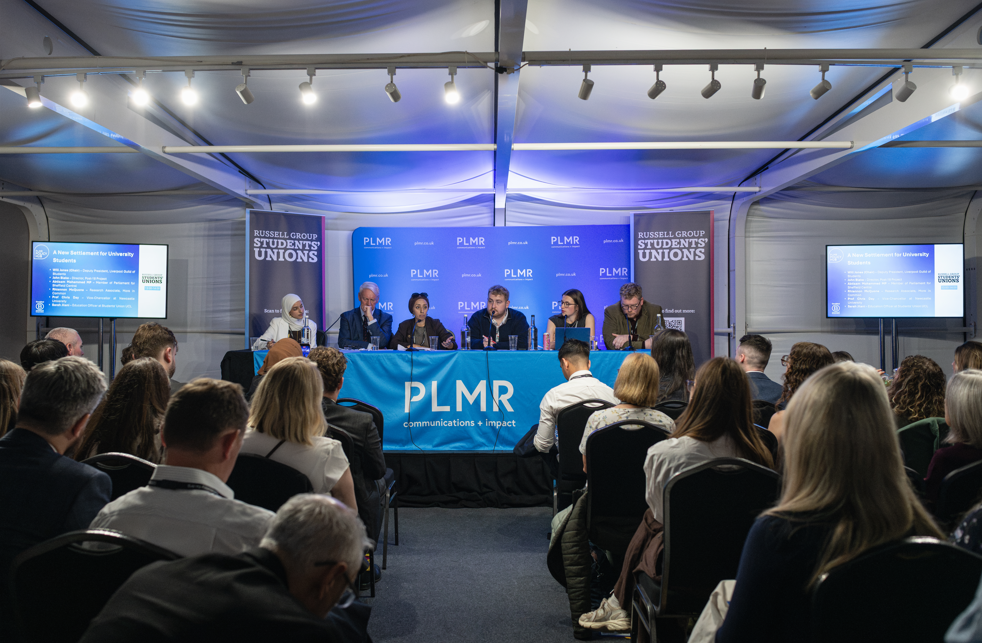
At Labour Party Conference, Russell Group Students’ Unions brought together students' unions, parliamentarians, sector experts and university leaders to discuss a critical question: what would a compelling future for students look like?
The discussion highlighted a growing concern that, while higher education remains one of the UK's greatest strengths, the student experience is becoming increasingly difficult to access and sustain. Material conditions have a direct consequence on the academic experience and, whilst students continue to believe in the value of higher education, many are struggling with rising living costs, insecure housing, financial hardship and uncertainty about the future.
A recurrent theme throughout the panel was that the challenges facing students are not simply economic ones. It is about the wider social contract. Many students feel they have done everything asked of them, only to find that higher education no longer guarantees the opportunities or security previous generations expected.
For Labour, rebuilding trust with students means recognising these pressures and responding with an ambitious plan. Students – who represent a significant and growing voter base in the UK – must be included in cost of living support packages and provided with accessible pathways to employment post-study.
A renewed settlement for students
We heard a consensus on the panel for a broad restructuring of higher education funding.
Panel members argued that maintenance support has failed to keep pace with the real cost of living, leaving many students reliant on paid work, hardship funds and, in some cases, food banks simply to get through their studies. Indeed, Save the Student reports that almost one in 10 students are using foodbanks, a sobering but vital service that SUs increasingly provide across the Russell Group.
This has profound implications for equality of opportunity. Students from wealthier backgrounds are often able to participate fully in university life, while others face significant barriers to engagement and success.
There was broad agreement that reforms to student finance must be accompanied by a conversation about the long-term sustainability of universities themselves. Student support and institutional funding cannot be treated as separate issues. A successful higher education system requires both students and universities to be properly supported.
Students as citizens, not just learners
The student-institution relationship goes far beyond lecture halls, with students engaged in extracurricular activities, civic life and local communities around their campuses and accommodations. We see an increasing number of students commuting to campus and a huge number living within the private rental sector in towns and cities across the UK.
Housing, transport, local services, employment opportunities and community investment therefore all directly impact the student experience. Students are active participants in the places where they live and study, and policies in these areas can have as much impact on their lives as changes to higher education legislation.
This means embedding students within a wider agenda for local and national renewal rather than treating them as a separate policy category that ignores the complexity and diversity of the modern student body.
The opportunity of devolution
The panel also explored the implications of expanding devolution across England.
Devolution presents a significant opportunity to improve student lives. Decisions about housing, transport, skills and economic development are increasingly being made closer to communities, creating new opportunities for student voices to shape local policy.
However, students must be included in these emerging structures from the outset. If mayors, combined authorities and local leaders are to make decisions that affect students, students need meaningful representation around the table.
Examples from across the country demonstrated how partnerships between universities, students' unions, local authorities and mayoral authorities can deliver tangible benefits. The challenge now is ensuring student participation becomes a permanent feature of devolved governance rather than a discretionary choice.
Higher education is still worth it
Despite the challenges, the panel united around one fundamental point: higher education remains enormously valuable.
Universities create opportunities for individuals, strengthen communities, drive innovation, develop skilled professionals and support regional growth. The value of higher education extends far beyond graduate salaries alone. It includes personal development, civic engagement, cultural enrichment and lifelong opportunity.
The discussion also challenged increasingly narrow debates about the purpose of higher education. Universities should help students prepare for careers, but they should also remain places where people can explore ideas, develop critical thinking and learn for the sake of learning.
A vision Labour can champion
A stronger student offer means addressing the cost of living, securing the future of higher education institutions and ensuring students have a voice in the decisions that shape their lives. The government must champion the role universities play in regional growth by embedding students and institutions into the devolution agenda.
Students’ Unions from across the Russell Group are calling for a fair deal that ensures an acceptable standard of living during studies and equips students with the skills and opportunities they need to succeed in an increasingly challenging graduate job market. The Government can start by treating higher education not as a cost to be managed, but as an investment in the country's future.
With thanks to PLMR for hosting our event, and to our panellists:
Will Jones (Chair) - Deputy President, Liverpool Guild of Students
Abtisam Mohamed - Member of Parliament for Sheffield Central
Professor Chris Day - Vice-Chancellor, Newcastle University
Professor John Blake - Director, Post-18 Project
Rhiannon McQuone - Research Associate, More in Common
Sarah Jilani - Education Officer, Students' Union UCL